
History of Gangnam
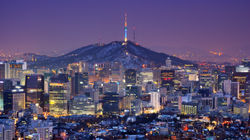
I believe that to understand a culture well, we have to look at the history. As the capital of South Korea, Seoul is one of the top ten richest cities in the world. (Zaib, 2015) The Han River divided this old town into two sections Gangbuk and Gangnam. Gangbuk, on the northern side of Han River, was the political, economic and cultural centre during ancient times. There are many historical and cultural heritages in the area. While Gangnam, which is on the Han River’s southeastern edge, has surpassed Gangbuk and grown up to be the heart of Seoul due to the rapid economic development in recent decades.
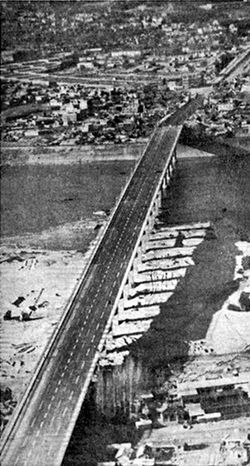
In the 1970s, South Korea managed to achieve the economic takeoff from poverty and backwardness, which is known as the "miracle of the Han River.” Taking the preparation for the 1988 Seoul Olympic games as an opportunity, South Korea conducted a large-scale development of the southern region of Han River to showcase for the nation’s future modernization. The construction of a sound infrastructure made the farmland become South Korea's most prosperous business district.
On the other hand, because of the development of heavy industry, air pollution became increasingly severe in Gangbuk. In 1970, Seoul's population reached 5.43 million, and overcrowded Gangbuk made people unbearable. During this period, moving to the southern part of Seoul was considered fashionable, as Gangnam’s was more livable comparing to Gangbuk. Today, people of Seoul still retain a good impression of the environment in Gangnam. A famous drawing published in the 1980s conveys the idea that people believed moving to the south equal to leaving the dirty and messy environment and entering a stylish and contemporary urban world.
In this process, the Gangnam area has become a gathering place for the upper-class elite. Including leaders of major companies and the Chaebol families (families with large enterprises) like Lee Kun-hee (Samsung Group) and Koo Bon-moo (LG Corp), as well as political officials like Lee Myung-bak (ex-president). A lot of multinational corporations are located at places like Samseong-dong, Yeoksam-dong and Sinsa-dong while Apgujeong is famous for high fashion boutiques, and Nonhyeon-dong is the location of many entertainment companies. Underwritten by the state, promotion of private ownership and land speculation in Gangnam bred a highly materialistic urban culture and superior sense of citizen. (Kim, 2014) Since then, living in the southern region has become a symbol of identity, as it is the new economic, political and cultural centre of Korea.
 |  |  |
|---|---|---|
 |  |  |
 |  |  |
 |  |  |
 |  |  |
My favourite Dongs (neighbourhoods) at Gangnam District

Cheongdam-dong
(청담동; 清潭洞) is an area epitomizes the wealthy lifestyle of Koreans, especially for young professionals who have studied overseas. It is known as an upmarket shopping area, with the main shopping street dubbed "Cheongdam’s Fashion Street".
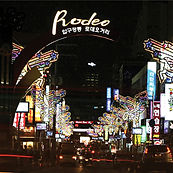
Apgujeong-dong
(압구정동; 狎鷗亭洞) It is an upmarket residential, fashion, shopping, and educational area. One of the main shopping area is Apgujeong Rodeo Street, along with Cheongdam-dong Fashion Street in Cheongdam-dong and Garosu-gil in Sinsa-dong, which are connected by the main avenue Apgujeong-ro. It is seen as a fashionable and trendsetting destination.

Samseong-dong
(삼성동; 三成洞) It is an affluent area has a large concentration of upscale shopping malls, popular restaurants and world-renowned hotels such as the Ramada Seoul Hotel and the Hyatt Park Hotel. Samseong-dong is also home to some of Asia's best nightclubs that are frequently patronized by wealthy residents and celebrities. Apart from its nightlife accolades, the COEX mall, the world's largest underground shopping mall, is located here.

Yeoksam-dong
(역삼동; 驛三洞) It holds many of the tallest buildings in Seoul in a collection of corporate headquarters and high-rise office buildings.